
- February 7, 2026
- Posted by: SOUTECH Brands
- Category: Ethical Hacking and Kali Linux Free Training
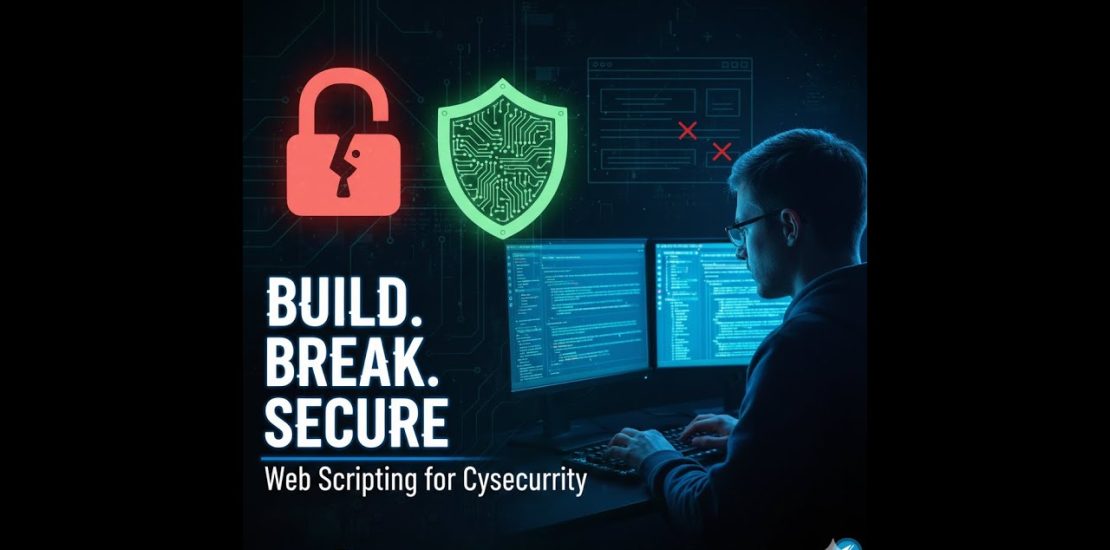
In the high-stakes world of information security, a fundamental truth remains: “To protect a system, you must first understand how to build it.” At SOUTECH Ventures Academy, we don’t just teach you how to use security tools; we teach you the architectural logic behind the digital assets you are defending.
Our latest Cybersecurity Masterclass focuses on the critical intersection of Web Scripting and Networking. In the modern IT landscape, these are the two most paramount skills for any aspiring security expert or penetration tester.
The Architecture of Defense: Why Building Matters
Every digital asset—whether it’s a corporate website, a mobile app, or a cloud server—resides on a complex infrastructure of servers and networks. As a Cybersecurity Analyst, your job is to guard these entry points.
The most effective way to identify a vulnerability is to understand the Software Development Life Cycle (SDLC). When you know how a system is gathered, designed, and coded, you can easily spot the “cracks” in the foundation.
-
Build it: Learn the workflow of a developer.
-
Break it: Use that knowledge to investigate vulnerabilities.
-
Fix it: Implement patches and hardening techniques to secure the asset.
The Essential Scripting Languages for 2026
If you are starting your journey at our Abuja hub, your roadmap begins with two heavyweights of the scripting world: PHP and Python.
-
Python: The undisputed “Swiss Army Knife” for cybersecurity. Most modern automation tools and hacking scripts are built using Python due to its versatility.
-
PHP: The language of the web. Understanding PHP is essential because many platforms for teaching the Open Web Application Security Project (OWASP) standards are built on it.
The Security Stack: Front-End to Back-End
To be a job-ready analyst, you must master the full spectrum:
-
Front-End (The Attack Surface): HTML, CSS, JavaScript, and Bootstrap. This is where client-side vulnerabilities like XSS often hide.
-
Back-End (The Logic): PHP, Python, Java, and R.
-
Databases (The Target): MySQL, MongoDB, NoSQL, and Oracle DB. This is where your critical data lives.
Vulnerability Spotlight: SQL Injection (A03:2021)
During our practical labs, we demonstrate how building a simple system (like an inventory or school portal) can lead to massive security holes if not done correctly.
A prime example is SQL Injection. By using SQL to perform CRUD (Create, Read, Update, Delete) operations, an attacker can “inject” malicious commands into your database. This is currently listed as a top threat in the OWASP Top 10, and we teach you both how to execute it in a lab environment and how to prevent it in production.
Your Local Lab: Setting Up with XAMPP
You don’t need a live server to start hacking. We instruct all our students to set up a local testing environment using XAMPP (or WAMP for Windows / LAMP for Linux).
-
Apache: Your local web server.
-
MySQL: Your local database.
-
PHP/Perl: Your scripting engines.
Combined with Visual Studio Code, this setup allows you to build, test, and secure web applications entirely on your PC. It’s the perfect sandbox to “get your hands dirty” without the cost of hosting.
Why Focus on WordPress?
At SOUTECH Ventures, we dedicate significant time to WordPress Security. Why? Because WordPress powers 43% of the world’s websites. Its massive footprint makes it the primary target for hackers globally. Mastering CMS security—including Shopify, Wix, and Joomla—ensures you are prepared to protect nearly half of the internet.
Frequently Asked Questions (FAQ)
1. Is this course suitable for beginners in Abuja? Yes! We start with the basics of HTML and CSS before transitioning into the security complexities of PHP and Python. We meet you where you are.
2. What is the OWASP Top 10? It is a globally recognized list of the most critical web application security risks. Our curriculum is mapped directly to these standards to ensure your skills are relevant worldwide.
3. Do I need a powerful computer for the training? A standard laptop with 8GB RAM is sufficient. We use lightweight tools like XAMPP and VS Code to turn your machine into a powerful security lab.
4. Will I get a certificate after the training? Yes, SOUTECH Ventures Academy provides a professional certificate upon completion, validating your skills in Web Scripting and Vulnerability Assessment.
Related posts:
 How to become an ethical hacker in Nigeria- SOUTECH Cyber security and CEH training program
 CSS color formats and alpha transparency
 Cybersecurity and Ethical Hacking- Kali Linux Training in Abuja,Nigeria
 How to Transition from a Beginner to a Professional Ethical Hacker
 Certified Ethical Hacker Training- Cyber Security Courses in Nigeria- SOUTECH Web Consuts