
- May 20, 2026
- Posted by: SouTech Team
- Category: Others
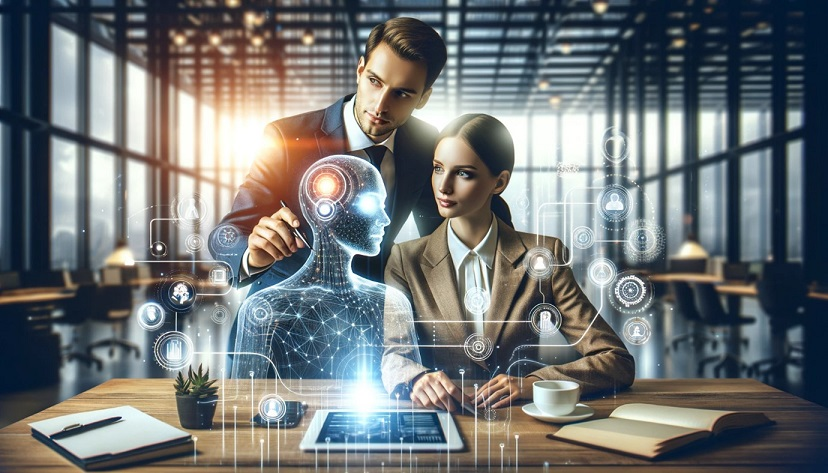
Artificial Intelligence and Machine Learning: Transforming the Future of Business and Society
Introduction
Artificial Intelligence (AI) and Machine Learning (ML) have become two of the most influential technologies shaping the modern world. From smartphones and virtual assistants to online banking, healthcare systems, education, and business automation, AI and machine learning are rapidly transforming the way people live and work. Businesses across industries are adopting intelligent technologies to improve productivity, enhance customer experiences, reduce operational costs, and gain competitive advantages in an increasingly digital economy.
Although many people use the terms Artificial Intelligence and Machine Learning interchangeably, they are not exactly the same. Artificial Intelligence refers to the broader concept of machines performing tasks that typically require human intelligence, while Machine Learning is a branch of AI that enables systems to learn from data and improve their performance without being explicitly programmed.
As technology continues to evolve, AI and machine learning are becoming essential tools for organizations, governments, educational institutions, and individuals seeking to remain relevant in the digital age. This article explores the meaning of AI and machine learning, their applications, benefits, challenges, and the future impact these technologies will have on society and businesses worldwide.
Understanding Artificial Intelligence
Artificial Intelligence is the simulation of human intelligence in machines. These intelligent systems are designed to perform tasks such as decision-making, speech recognition, problem-solving, language translation, visual perception, and data analysis.
AI systems are built to mimic human thinking and behavior using algorithms, data processing, and computational models. Examples of AI technologies used today include:
- Virtual assistants like Siri and Alexa
- Chatbots for customer service
- Recommendation systems on streaming platforms
- Facial recognition systems
- Autonomous vehicles
- Smart home technologies
AI can generally be categorized into three types:
1. Narrow AI
This type of AI is designed to perform specific tasks. Most AI applications used today fall into this category. Examples include voice assistants, spam filters, and recommendation engines.
2. General AI
General AI refers to systems capable of performing any intellectual task that a human can do. Although researchers are working toward this goal, true General AI does not yet exist.
3. Super AI
Super AI is a theoretical concept where machines surpass human intelligence and capabilities. While still speculative, discussions around Super AI raise ethical and societal concerns.
What Is Machine Learning?
Machine Learning is a subset of AI that focuses on enabling computers to learn from data and improve automatically through experience. Instead of programming every instruction manually, machine learning models analyze patterns in data and make predictions or decisions based on those patterns.
Machine learning works through algorithms that process large amounts of data to identify relationships and trends. Over time, the system becomes more accurate as it learns from additional information.
Types of Machine Learning
1. Supervised Learning
In supervised learning, algorithms are trained using labeled data. The system learns by comparing predicted outputs with actual results. Examples include email spam detection and price prediction systems.
2. Unsupervised Learning
This involves analyzing unlabeled data to identify hidden patterns or groupings. Businesses often use unsupervised learning for customer segmentation and market analysis.
3. Reinforcement Learning
Reinforcement learning involves systems learning through trial and error. The machine receives rewards for correct actions and penalties for mistakes. This method is commonly used in robotics and gaming technologies.
The Importance of AI and Machine Learning in Modern Society
AI and machine learning are revolutionizing industries by improving efficiency, accuracy, and decision-making processes. These technologies are helping organizations solve complex problems faster and more effectively than traditional systems.
1. Improved Business Efficiency
Businesses use AI-powered systems to automate repetitive tasks, reduce human error, and streamline operations. Automation saves time and allows employees to focus on higher-value activities such as strategy, creativity, and customer engagement.
For example:
- Automated chatbots handle customer inquiries
- AI systems manage inventory and logistics
- Smart software analyzes business performance data
2. Enhanced Decision-Making
Machine learning algorithms analyze massive amounts of data quickly and provide valuable insights for decision-making. Companies use predictive analytics to forecast customer behavior, market trends, and financial risks.
This enables businesses to make informed decisions based on accurate data rather than assumptions.
3. Personalized Customer Experiences
AI technologies help businesses deliver personalized experiences to customers. Online platforms recommend products, music, movies, and services based on user preferences and behavior.
Personalization improves customer satisfaction and increases sales opportunities.
4. Healthcare Advancements
AI and machine learning are transforming healthcare through faster diagnosis, medical imaging analysis, drug discovery, and patient monitoring systems.
Hospitals use AI tools to:
- Detect diseases early
- Analyze medical records
- Improve treatment accuracy
- Support surgical procedures
These technologies help healthcare professionals provide better and more efficient care.
5. Education and Learning
Educational institutions are using AI-powered platforms to create personalized learning experiences for students. Intelligent tutoring systems can identify learning gaps and recommend customized lessons.
AI also supports:
- Virtual classrooms
- Automated grading systems
- Language translation tools
- Educational chatbots
This improves accessibility and learning outcomes for students worldwide.
Applications of AI and Machine Learning Across Industries
Banking and Finance
Financial institutions use AI for fraud detection, risk assessment, customer support, and algorithmic trading. Machine learning systems analyze transaction patterns to identify suspicious activities and prevent fraud.
Banks also use chatbots and virtual assistants to improve customer service and operational efficiency.
Retail and E-Commerce
Retail companies use AI to understand customer behavior, optimize pricing strategies, and manage supply chains. Recommendation systems help customers discover products based on previous purchases and browsing history.
AI also supports automated warehouses and inventory management systems.
Manufacturing
Manufacturers use AI-driven automation and predictive maintenance to improve productivity and reduce downtime. Smart machines can identify equipment issues before failures occur, saving costs and improving operational performance.
Transportation and Logistics
AI technologies are transforming transportation through autonomous vehicles, traffic management systems, and route optimization tools.
Logistics companies use machine learning to improve delivery efficiency and reduce fuel consumption.
Agriculture
Farmers are using AI-powered technologies to monitor crop health, predict weather patterns, and optimize irrigation systems. These innovations improve food production and resource management.
Cybersecurity
AI helps organizations detect cyber threats and prevent security breaches in real time. Machine learning systems analyze network activity and identify unusual behavior before attacks occur.
As cyber threats continue to increase globally, AI-based cybersecurity solutions are becoming more important.
Challenges and Concerns of AI and Machine Learning
Despite their benefits, AI and machine learning also present several challenges and ethical concerns.
1. Job Displacement
Automation may replace certain jobs previously performed by humans. Roles involving repetitive or routine tasks are particularly vulnerable.
However, AI is also creating new opportunities in fields such as:
- Data science
- Cybersecurity
- Software development
- AI engineering
- Digital marketing
The focus should be on reskilling and preparing workers for future job demands.
2. Data Privacy and Security
AI systems rely heavily on data collection and analysis. Poor data management practices can expose sensitive information and increase privacy risks.
Organizations must implement strong data protection measures and comply with regulations to ensure responsible use of AI technologies.
3. Bias and Discrimination
Machine learning systems can inherit biases from the data used to train them. If not properly monitored, AI systems may produce unfair or discriminatory outcomes.
Developers and organizations must prioritize fairness, transparency, and accountability in AI development.
4. High Implementation Costs
Developing and implementing AI systems can be expensive, especially for small businesses. Costs may include infrastructure, software, skilled professionals, and maintenance.
Despite these challenges, AI adoption continues to grow as technology becomes more accessible.
The Future of AI and Machine Learning
The future of AI and machine learning is filled with enormous potential. As computing power increases and data availability expands, intelligent systems will become even more advanced and integrated into everyday life.
AI in Smart Cities
Governments are exploring AI-powered solutions for traffic control, waste management, energy efficiency, and public safety. Smart city technologies can improve urban living and sustainability.
AI in Remote Work
AI tools are supporting remote work through virtual collaboration platforms, automated scheduling, and productivity monitoring systems.
AI and Creativity
AI is now being used in creative industries such as music, art, video production, and content creation. Intelligent tools assist creators with editing, design, and idea generation.
Human-AI Collaboration
Rather than replacing humans entirely, the future will likely involve collaboration between humans and intelligent systems. AI can handle repetitive tasks while humans focus on creativity, emotional intelligence, and strategic thinking.
Why Businesses Must Embrace AI and Machine Learning
Businesses that fail to adopt AI technologies risk falling behind competitors in a rapidly changing digital environment. AI and machine learning offer organizations the ability to innovate, scale operations, improve customer experiences, and increase profitability.
Companies should focus on:
- Developing digital strategies
- Training employees in AI-related skills
- Investing in data management systems
- Partnering with technology experts
- Promoting ethical AI practices
Successful organizations will be those that combine technology with human expertise to create value and drive sustainable growth.
Conclusion
Artificial Intelligence and Machine Learning are reshaping the global economy and transforming nearly every industry. These technologies are improving efficiency, enabling smarter decision-making, and creating new opportunities for innovation and growth.
From healthcare and finance to education, manufacturing, and cybersecurity, AI-powered systems are helping organizations solve complex challenges and deliver better services. While concerns such as job displacement, privacy risks, and ethical issues remain important, the benefits of AI and machine learning continue to outweigh the challenges when implemented responsibly.
As the digital world evolves, businesses, professionals, and students must embrace continuous learning and adapt to emerging technologies. AI and machine learning are no longer optional innovations; they are becoming essential components of future success in business and society.
Organizations that invest in intelligent technologies today will be better positioned to compete, innovate, and thrive in the technology-driven world of tomorrow.
Related posts:
 Machine Learning and Artificial Intelligence a Bigger Picture
 The Future of Digital Transformation: Why Every Business Needs a Tech Consultant
 Lexicon Alchemy: Transforming Language into Intelligence with Natural Language Processing (NLP)
 Data Intelligence: Elevating Your Business IQ through Analysis
 Artificial Intelligence in Healthcare: Revolutionizing Patient Care and Diagnosiss