- August 6, 2026
- Posted by: SOUTECH Brands
- Category: Alternative Energy- Solar and Inverter, Blog
Brought to you by SOUTECH Ventures in collaboration with Clacachi Energy Solutions Limited
1. Introduction to Renewable Solar Energy
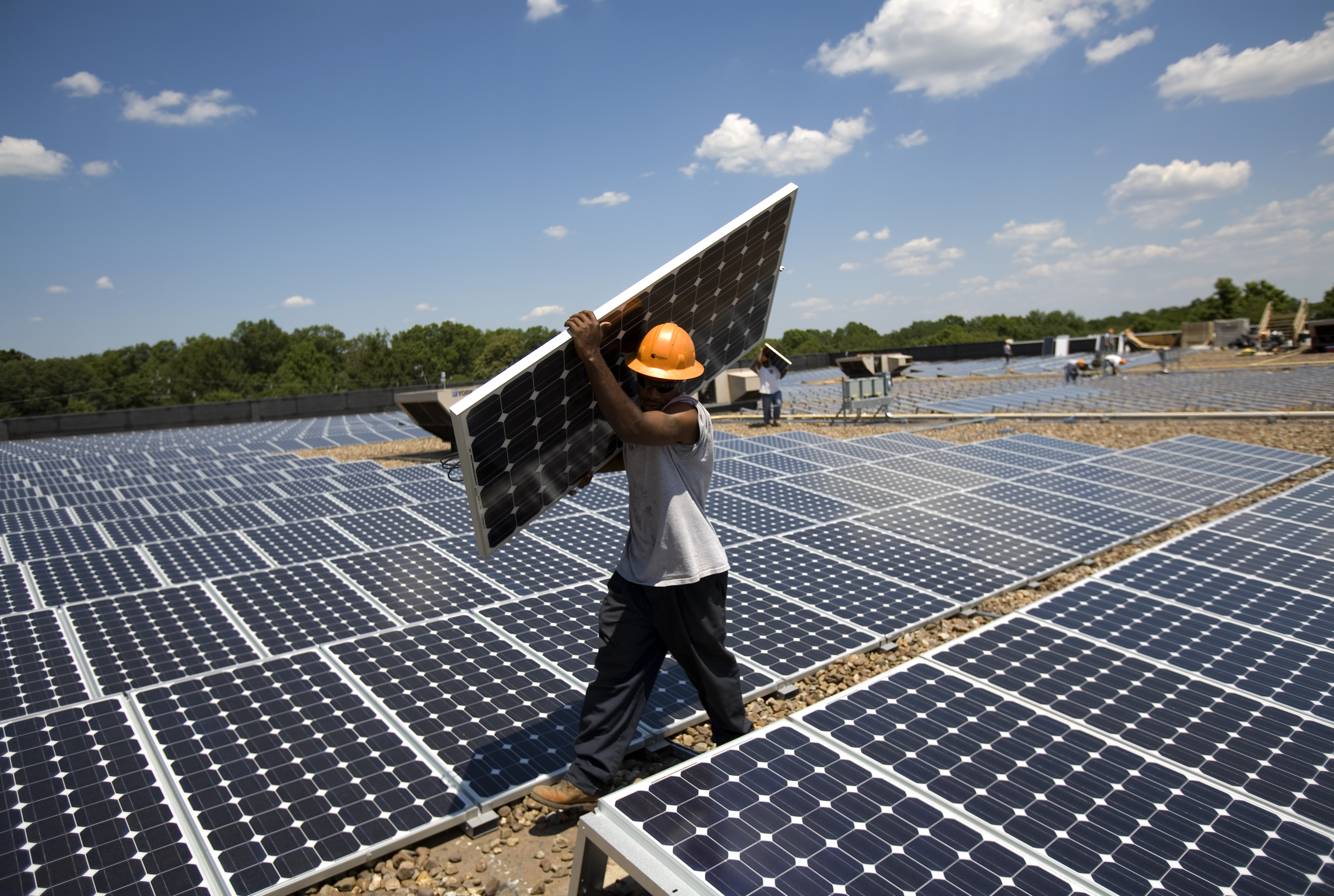
Solar Photovoltaic (PV) systems convert sunlight directly into usable alternating current (AC) electricity through solar cells, providing an independent, clean, and cost-effective power alternative to traditional grids and diesel generators. With rising fuel tariffs, unstable grid supply, and expanding commercial activities across Nigeria, solar energy adoption has transitioned from an optional luxury to a critical infrastructure requirement.
Whether powering a residential home, multi-tenant property, corporate facility, or industrial plant, understanding the end-to-end solar deployment process ensures system reliability, safety, efficiency, and long-term return on investment (ROI).
Through our joint technical initiative, SOUTECH Ventures and Clacachi Energy Solutions Limited provide industry-standard hands-on training, energy auditing, and turnkey installation services. To make solar accessible to businesses, institutions, and individuals, we offer flexible installation packages requiring as low as a 60% down payment for our registered partners, students, and clients.
2. The 7-Stage Solar Installation Lifecycle
The successful execution of a solar installation relies on a strict, chronological 7-phase operational flow. Skiping or mismanaging any step compromises system longevity and electrical safety.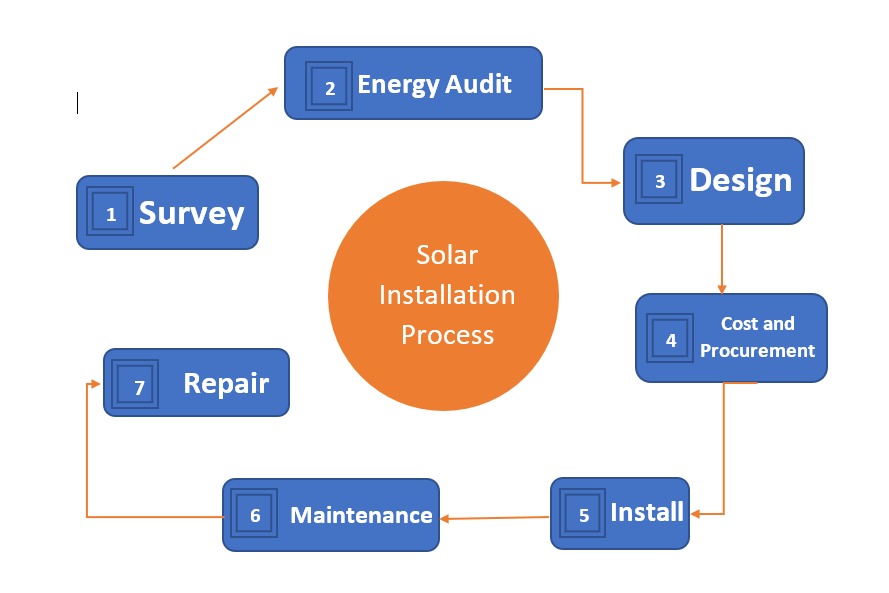
Stage 1: Site Survey
The initial physical survey establishes the environmental and structural parameters of the site.
-
Azimuth and Tilt Assessment: Technicians measure solar azimuth (orientation towards the equator) and set roof tilt angles (typically 5° to 15° in West Africa) to maximize irradiance.
-
Shading and Obstacle Analysis: Evaluation of surrounding trees, adjacent buildings, and roof structures (parapets, chimneys) using solar pathfinder tools or shading simulation software.
-
Structural Engineering Check: Inspecting roof integrity (concrete deck, long-span aluminum, corrugated iron, or ground mount area) to verify load-bearing capacity for racking hardware and solar panels.
-
Cable Routing Routing Paths: Mapping physical pathways from roof arrays down to the central inverter/battery storage room and main AC Distribution Board (DB).
Stage 2: Energy Audit & Load Analysis
A solar energy audit quantifies the total electrical consumption to prevent under-sizing or over-sizing of equipment.
-
Appliance Inventory: Recording wattage rating (W), quantity, operational starting surges (inductive motor loads like air conditioners and pumps), and running hours per day for all electrical loads.
-
Daily Energy Consumption Calculation:
-
Peak Load Determination: Establishing maximum simultaneous wattage demand (kW) to size the continuous output capacity of the inverter.
-
Power Factor Correction: Measuring power factors on inductive loads to protect inverter efficiency.
Stage 3: System Design & Engineering
System design converts energy audit metrics into a precise technical design blueprint.
-
Inverter Sizing: Selecting Pure Sine Wave off-grid or hybrid inverters based on peak surge capacity and continuous AC output requirement.
-
Battery Bank Sizing: Sizing storage systems (Lithium LiFePO4 vs. Tubular Gel) using nominal system voltage 12V, 24V, 48V, 51.2V, or High Voltage and calculating required Amp-Hour Ah capacity based on targeted Days of Autonomy (DoA) and maximum Depth of Discharge (DoD).
-
Solar Array Sizing & MPPT Matching: Calculating panel count based on Peak Sun Hours (PSH) and stringing panels in series/parallel to align array Open Circuit Voltage and Short Circuit Current within the MPPT charge controller limits.
-
Protection Device Specifications: Engineering DC/AC surge protection devices (SPDs), DC isolators, fuse links, AC miniature circuit breakers (MCBs), molded case circuit breakers (MCCBs), changeover switches, and protective earthing grounding pits.
Stage 4: Cost Estimation & Procurement
Procurement translates engineering specs into verified hardware procurement lists.
-
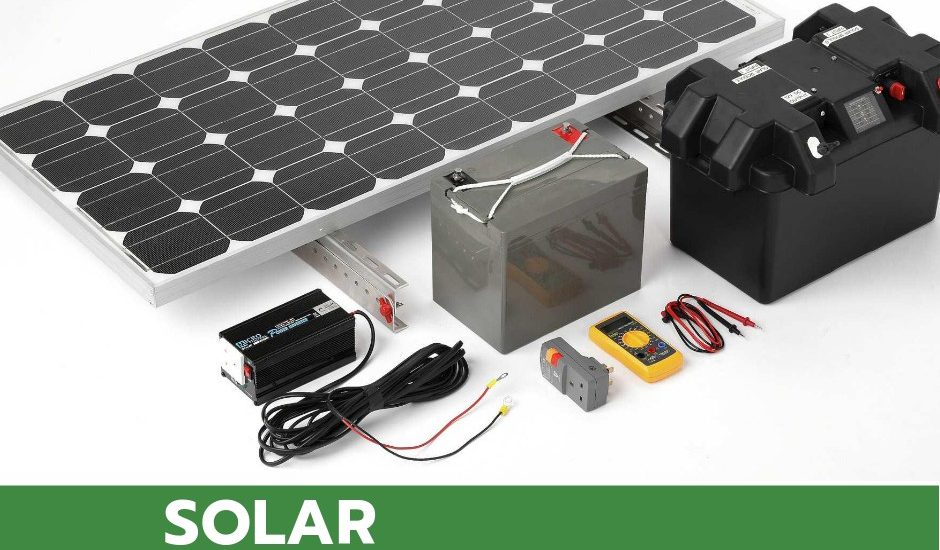
Bill of Quantities (BOQ): Generating line-item costs covering Tier-1 solar panels, smart hybrid inverters, LiFePO4 lithium, Dry or Wett Cell battery banks, solar mounting rails/clamps, UV-resistant DC solar cables, distribution boxes, and trunking channels.
-
Quality Verification: Verifying panel flash test reports, battery cycle life ratings >6000 cycles at 80% DoD , serial numbers, and manufacturer warranties.
-
Flexible Financing Arrangement: Approval of client payment structures, including Clacachi Energy & SOUTECH’s 60% Down Payment Structure to accelerate project execution for partner clients.
Stage 5: Installation & Integration
Physical assembly and electrical interconnections performed by certified technicians.
-
Racking & Mounting: Securely anchoring mounting rails onto roof structures or ground frames using weather-tight sealant flashed brackets.
-
Panel Assembly: Mounting solar modules onto racking frames using mid-clamps and end-clamps torqued to manufacturer specs.
-
DC Electrical Wiring: Cable management using conduit, crimping MC4 connectors using specialized ratchet crimping tools, and routing UV-resistant DC solar cables to the inverter room.
-
Inverter & Battery Bank Setup: Wall-mounting inverter units in ventilated rooms, installing battery racks, connecting lithium battery banks via busbars, and wiring protective circuit breakers.
-
Commissioning & Handover: Conducting insulation resistance tests, checking open-circuit voltage, verifying polarity, performing initial power-on sequence, configuring inverter battery settings, and testing load transfer during power cuts.
Stage 6: Preventive Maintenance
Ongoing operational checks to ensure peak generation efficiency and hardware longevity.
-
Panel Cleaning: Removing dust, soot, and bird droppings from module glass surface using non-abrasive soft brushes and demineralized water.
-
Thermal Inspection: Conducting periodic thermal imaging scans on electrical junction boxes, breakers, and cable terminations to identify loose connections or hot spots.
-
Battery Monitoring: Checking State of Charge (SoC), State of Health (SoH), individual cell voltage balance via Battery Management System (BMS) software, and operational environment temperatures.
Stage 7: Repair & Maintenance Lifecycle
Addressing system failures, component degradation, or power capacity expansions.
-
Troubleshooting Error Codes: Diagnosing inverter fault alerts (e.g., bus over-voltage, BMS communication loss, PV over-current).
-
Component Replacement: Replacing degraded battery cells, failed charge controller boards, or damaged DC breakers.
-
System Upgrades: retrofitting existing installations with additional solar panels, parallel inverter configurations, or expanded battery banks as power consumption needs grow over time.
3. Training Locations
Students looking to enter the clean energy industry can join practical, hands-on training sessions hosted by SOUTECH Ventures and Clacachi Energy across three core regional hubs ( Abuja, Owerri, Port Harcourt solar training offices)
-
4. Frequently Asked Questions (FAQ)
Q1: Can I pay for my solar installation in installments?
Yes. SOUTECH Ventures and Clacachi Energy Solutions Limited offer flexible execution plans allowing qualified clients, partners, and students to begin installations with an initial down payment as low as 60%, with the remaining balance structured over agreed milestones.
Q2: What is the main difference between an Off-Grid and a Hybrid Solar System?
An Off-Grid system operates independently of the public power grid, storing all excess solar power in batteries for night use. A Hybrid system connects to both solar panels, batteries, and the utility grid/generator, intelligently prioritizing sources to minimize grid usage while maintaining backup power.
Q3: Why is a professional Energy Audit necessary before buying solar equipment?
Skipping an energy audit often leads to under-sizing (causing frequent inverter shutdowns and overload errors) or over-sizing (wasting money on unnecessary equipment). An energy audit ensures your system is custom-designed to handle your exact power load efficiently.
Q4: How long do solar panels and lithium batteries last?
Tier-1 monocrystalline solar panels typically carry performance warranties of 25 years. Modern Lithium Iron Phosphate solar batteries last between 8 to 15 years (3,000 to 6,000+ deep cycles) when operated within recommended parameters while Dry and Wet cell batteries last at about 3-6yrs depending on usage.
Q5: What qualifications do I gain after completing the SOUTECH & Clacachi Solar Training?
Trainees receive practical, hands-on experience in load audit calculations, panel stringing, inverter configuration, battery setup, and safety protocols. Graduates receive a joint professional Certificate of Completion from SOUTECH Ventures and Clacachi Energy Solutions Limited, preparing them for immediate field installation work or solar entrepreneurship.
Enroll or Request an Energy Audit Today
Take control of your power requirements or start a rewarding career in renewable energy with SOUTECH Ventures and Clacachi Energy Solutions Limited.
-
Services: Professional Energy Audit, Turnkey Solar System Engineering, Industrial Maintenance, and 60% Down Payment Financing.
-
Training Locations: Physical training centers available in Abuja, Owerri, and Port Harcourt for solar, inverter and cctv comprehensive training
WhatsApp: 08034121380
Abuja HQ.
Related posts: